


.png)


Executive Summary
As a leading self-funded medical research charity, LifeArc accelerates the translation of early-stage scientific discoveries into life-changing diagnostics and treatments for patients. To support its complex bio-IT workloads and software development lifecycle across Dev, Infra, and QA teams, LifeArc’s engineers were adopting multiple AI coding tools and model providers. However, the organization lacked a centralized mechanism to track spend or control model access.
Fission Labs deployed CodeVector, a self-hosted AI coding governance gateway, directly in front of LifeArc’s coding tools.
Since the engagement began in November 2025, this implementation has empowered a core team of 12 to 15 engineers with per-project budget caps, role-based model access control, and full spend visibility across providers.
Business Challenge
Multiple AI coding tools, including Claude Code, Cursor, and others, were in use across multiple model providers, with no centralized way to attribute cost by tool, project, or developer.
- There was no mechanism to enforce per-project budgets or control which models each team could access, and no audit visibility into usage.
- Budget increases, when needed, had no controlled approval path, leaving the organization without a clear way to manage spend as AI tool adoption grew across Dev, Infra, and QA.
Technical Solution
Fission Labs deployed CodeVector as a self-hosted governance gateway sitting between developers' IDEs, including Claude Code, Cursor, and other OpenAI- and Anthropic-compatible tools, and the underlying model providers.
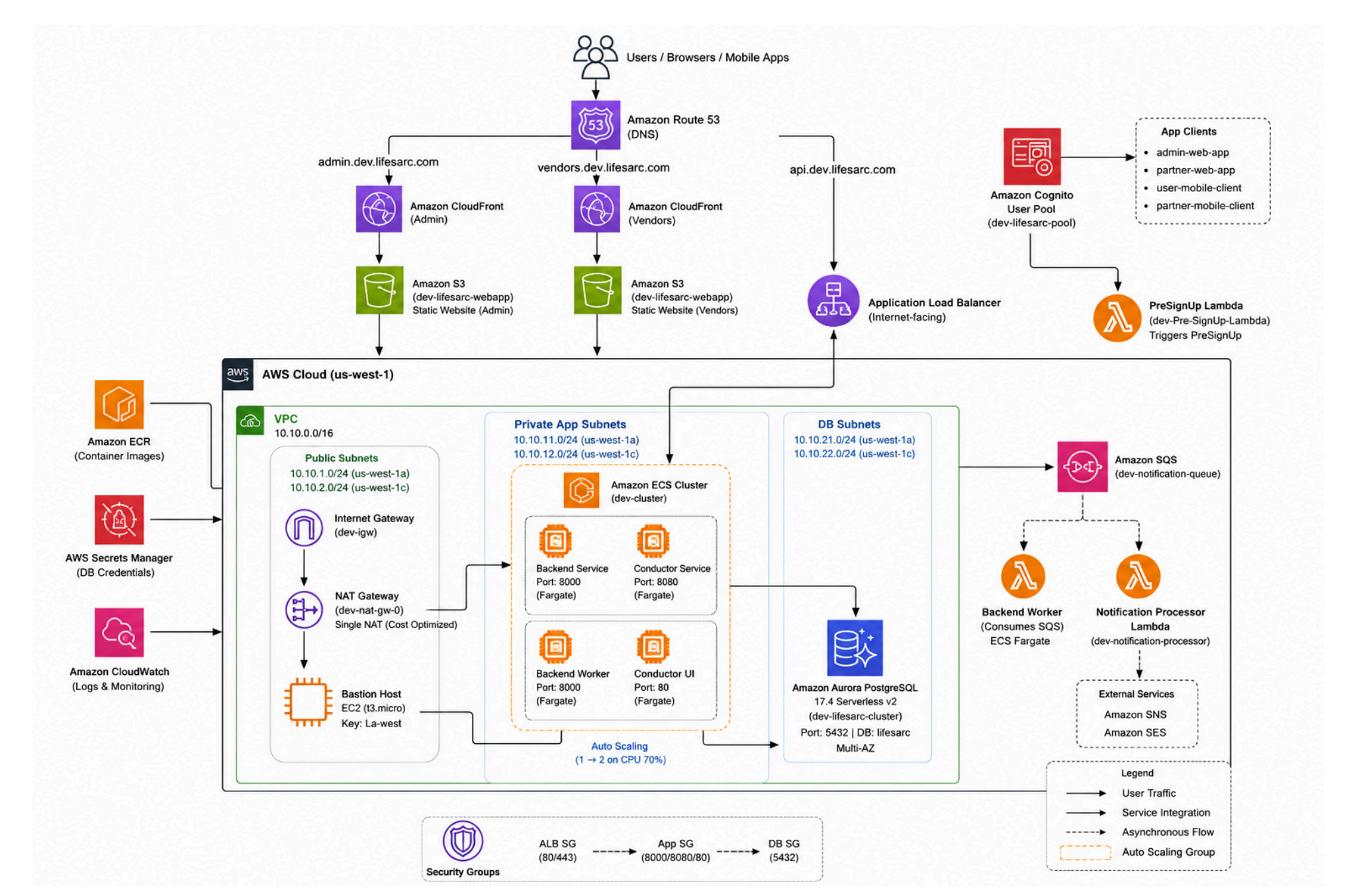
- The gateway provides per-seat and per-project USD budget caps on a daily, weekly, or monthly basis, with automated email alerts at 50%, 80%, and 100% of budget, plus an offline approval workflow to raise budgets when a cap is exceeded.
- Access grants control which models each user or group can call, based on role and use case, including Kimi, Claude Sonnet, and GPT-based coding models.
- A synchronous audit log records all admin changes for compliance, and per-IDE and per-repo cost attribution dashboards give full spend visibility across teams without changing how developers work day to day.
Notably, CodeVector supported the organization during the development of its own solution, rather than as a component of the delivered product itself.
Project Outcome and Impact
Over the course of the engagement, from November 24, 2025 to July 30, 2026, CodeVector was rolled out to a team of 12 to 15 engineers across Dev, Infra, and QA, with access granted to multiple AI models based on role and use case.
Per-project budget allocations gave the team clear cost visibility and control across providers, and budget increase requests, previously unmanaged, were resolved in minutes to hours through the offline approval workflow rather than causing work stoppages.
A snapshot from one project group shows the governance model in action: $42.08 in spend against a $50 monthly cap, 1,042 requests, and three models in active use. This is one group's usage, not a company-wide figure, and shouldn't be read as representative of the full 12 to 15 person team without further confirmation.
Conclusion
Centralizing AI model access through a self-hosted gateway gave this organization cost visibility that ad-hoc, per-tool subscriptions couldn't provide.
Per-project budget caps combined with a fast offline approval workflow struck the right balance between cost control and developer velocity, letting teams keep working without long waits when a budget needed to be raised. Rolling out access by role and team also surfaced a broader lesson: matching model choice to task complexity, rather than defaulting every developer to the most expensive option, is where the real efficiency gain comes from.
Ready to Bring Governance and Cost Control to Your AI Stack?
Uncapped model access and unpredictable token spend shouldn't slow down your organization's engineering momentum. Whether you are building bio-IT workflows, scientific platforms, or enterprise software, Fission Labs helps you deploy custom governance frameworks and self-hosted AI gateways designed for your specific compliance and operational needs.
Take control of your AI infrastructure today:
- Schedule an AI Infrastructure Audit (https://www.fissionlabs.com/contact-us) — Evaluate your current tool usage, identify hidden token costs, and establish clear attribution models across your development teams.
- Explore CodeVector Gateway (https://codevector.ai/) — Learn how a self-hosted gateway can enforce role-based access, budget caps, and real-time audit logs across your developer tools.