


.png)


Executive Summary
A fast-growing enterprise platform provider operating in the AI-driven data intelligence space required a scalable cloud platform capable of supporting hundreds of isolated customer environments while simplifying deployment, onboarding, and operations.
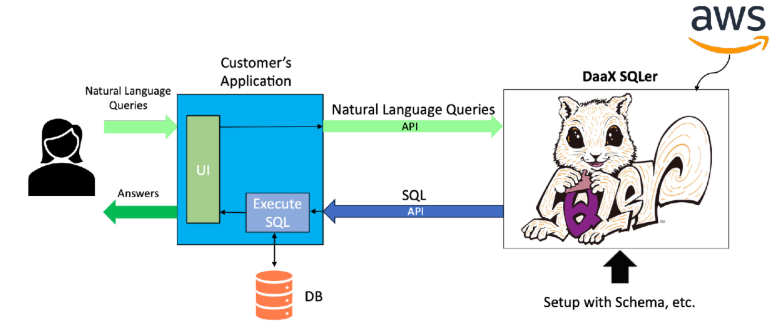
The organization provides a platform that enables users to interact with enterprise databases through natural language. As customer adoption increased, the organization needed a production-grade DevOps platform capable of automating infrastructure provisioning, application deployments, API management, customer isolation, and operational monitoring.
Fission Labs designed and implemented a cloud-native DevOps platform on AWS that automated the complete customer lifecycle—from onboarding and infrastructure provisioning to application deployment and API integration.
The solution leverages Amazon EKS, Amazon API Gateway, AWS Lambda, Kubernetes, Infrastructure as Code, and automated CI/CD pipelines to deliver a secure, scalable, and multi-tenant SaaS platform with strong operational governance.
Business Challenge
As the organization transitioned from a single-environment application to a multi-tenant SaaS platform, managing deployments and customer environments manually became increasingly complex.
The platform required every customer to receive an isolated application deployment while maintaining centralized operational control.
The organization needed to solve several challenges:
- Automated customer onboarding
- Multi-tenant infrastructure isolation
- Secure application deployments
- Automated environment provisioning
- API lifecycle management
- Scalable Kubernetes operations
- Operational monitoring and observability
- Simplified DevOps processes with minimal manual intervention
Manual deployment activities increased operational overhead, slowed customer onboarding, and introduced configuration inconsistencies across environments.
The organization required a fully automated DevOps platform capable of provisioning, deploying, scaling, and managing customer workloads reliably.
Technical Solution
Fission Labs implemented a cloud-native DevOps platform on AWS centered around Kubernetes, Infrastructure as Code, and event-driven automation.
The solution enables complete automation of customer onboarding, application deployment, API provisioning, and infrastructure lifecycle management.
Multi-Tenant Kubernetes Architecture
The application platform is hosted on Amazon Elastic Kubernetes Service (Amazon EKS), where every onboarded customer receives an isolated runtime environment.
For each customer:
- A dedicated Kubernetes Namespace is created automatically.
- Individual Deployments, Services, ConfigMaps, Secrets, and Ingress resources are provisioned.
- Applications execute independently within their assigned namespace.
- Network policies enforce strict isolation, preventing communication between customer environments.
- Resource quotas and limits ensure fair resource allocation across tenants.
This namespace-based architecture provides secure multi-tenancy while allowing centralized cluster management.
Automated Customer Provisioning
Customer onboarding is fully automated through event-driven workflows.
When a customer subscribes:
- Infrastructure provisioning workflows are initiated automatically.
- Kubernetes namespaces are created.
- Application services are deployed.
- Configuration parameters are generated.
- Secrets are provisioned securely.
- DNS and ingress configurations are applied.
- APIs are registered automatically.
This significantly reduces onboarding time while eliminating manual deployment activities.
Containerized Application Platform
Each platform component is packaged as an independent container image.
Applications are deployed onto Amazon EKS using Kubernetes, enabling:
- Rolling deployments
- Zero-downtime upgrades
- Horizontal scaling
- Self-healing workloads
- Declarative infrastructure management
The platform supports independent deployment and scaling of services based on workload demands.
API Management Platform
The platform exposes business operations through Amazon API Gateway.
A collection of customer lifecycle workflows —are published securely through API Gateway.
These APIs support operations such as:
- Customer Subscription
- Plan Upgrade
- Plan Downgrade
- Plan Cancellation
- Customer Provisioning
- Configuration Updates
- Environment Operations
API Gateway acts as the centralized API layer providing:
- Secure endpoint management
- Request routing
- Authentication
- Rate limiting
- API lifecycle management
Webhook endpoints from customer systems are integrated through API Gateway, enabling seamless event-driven communication between external platforms and the SaaS environment.
Event-Driven Automation
AWS Lambda functions orchestrate backend automation workflows.
These functions handle:
- Customer onboarding events
- Infrastructure provisioning
- Kubernetes deployment automation
- Namespace initialization
- Configuration management
- API registration
- Operational workflows
This event-driven model minimizes operational effort while ensuring consistent deployments.
Infrastructure as Code
Infrastructure provisioning follows Infrastructure as Code principles.
Platform resources—including Kubernetes manifests, networking configurations, IAM roles, API Gateway configurations, and supporting AWS resources—are managed using automated deployment pipelines.
This enables:
- Version-controlled infrastructure
- Repeatable deployments
- Environment consistency
- Simplified change management
Secure Multi-Tenant Design
Security is embedded throughout the platform architecture.
Customer environments are isolated using Kubernetes namespaces.
Additional security controls include:
- Namespace-level access control
- Kubernetes RBAC
- IAM-based AWS permissions
- Secure secret management
- Controlled API access
- Network isolation between workloads
This architecture ensures customers cannot access resources belonging to other tenants.
CI/CD Automation
Application delivery is fully automated using CI/CD pipelines.
The deployment pipeline performs:
- Container image builds
- Automated testing
- Image publishing
- Kubernetes deployment
- Configuration updates
- Deployment validation
- Rollback when required
This enables rapid and reliable software delivery across multiple customer environments.
Monitoring and Observability
The platform incorporates centralized monitoring and operational visibility.
Operational telemetry includes:
- Kubernetes cluster health
- Application metrics
- API activity
- Deployment status
- Infrastructure events
- Container logs
- Platform performance
This provides engineering teams with comprehensive visibility into platform operations.
Scalable Infrastructure Design
The architecture is designed for long-term SaaS growth.
Key scalability features include:
- Horizontal pod scaling
- Kubernetes workload orchestration
- Namespace-based tenant expansion
- Automated provisioning workflows
- Centralized cluster operations
- Independent application scaling
The platform enables rapid customer growth without proportional increases in operational complexity.
Key AWS Services Used
- Amazon Elastic Kubernetes Service (Amazon EKS) - Hosts all customer application workloads and provides a managed Kubernetes control plane for scalable container orchestration.
- Kubernetes - Manages application deployments, namespaces, service discovery, workload scheduling, scaling, and self-healing.
- Amazon API Gateway - Serves as the centralized API management layer, exposing approximately 34 business workflows securely while integrating customer webhooks with backend services.
- AWS Lambda - Executes event-driven automation for customer onboarding, provisioning, deployment orchestration, and operational workflows.
- AWS Identity and Access Management (IAM) - Provides fine-grained access control across AWS services and deployment automation.
- Amazon CloudWatch - Delivers centralized monitoring, logging, metrics collection, and operational insights across infrastructure and applications.
Project Outcome and Impact
The DevOps platform enabled the organization to transform its application into a scalable, production-ready SaaS platform.
Key outcomes include:
- Accelerated Customer Onboarding - Automated provisioning reduced onboarding time from manual processes to an event-driven deployment workflow.
- Secure Multi-Tenant Platform - Each customer operates within an isolated Kubernetes namespace, ensuring workload separation and enhanced security.
- Operational Efficiency - Automation significantly reduced manual deployment effort while improving deployment consistency.
- Improved Scalability - Amazon EKS enables independent scaling of workloads as customer adoption grows.
- Standardized Deployments - Infrastructure as Code and CI/CD pipelines ensure repeatable, reliable deployments across all customer environments.
- Enhanced API Management - Amazon API Gateway provides centralized governance for approximately 34 business APIs supporting customer lifecycle operations and webhook integrations.
- Improved Operational Visibility - Centralized monitoring and logging provide real-time insights into platform health, deployments, and application performance.
Conclusion
By implementing a cloud-native DevOps platform on AWS, the organization successfully transformed its application into a scalable multi-tenant SaaS solution capable of supporting enterprise growth.
The solution combines Kubernetes-based workload isolation, automated infrastructure provisioning, API lifecycle management, CI/CD automation, and operational observability to deliver a secure and highly available platform.
Fission Labs enabled the organization to modernize its DevOps practices by building an automated deployment ecosystem that accelerates customer onboarding, improves operational efficiency, and provides a secure foundation for large-scale SaaS operations on AWS.